Explore the design
A closer look
at Aagya.
Explore the shape, see the parts, and discover where the sensors could sit.
Design in development
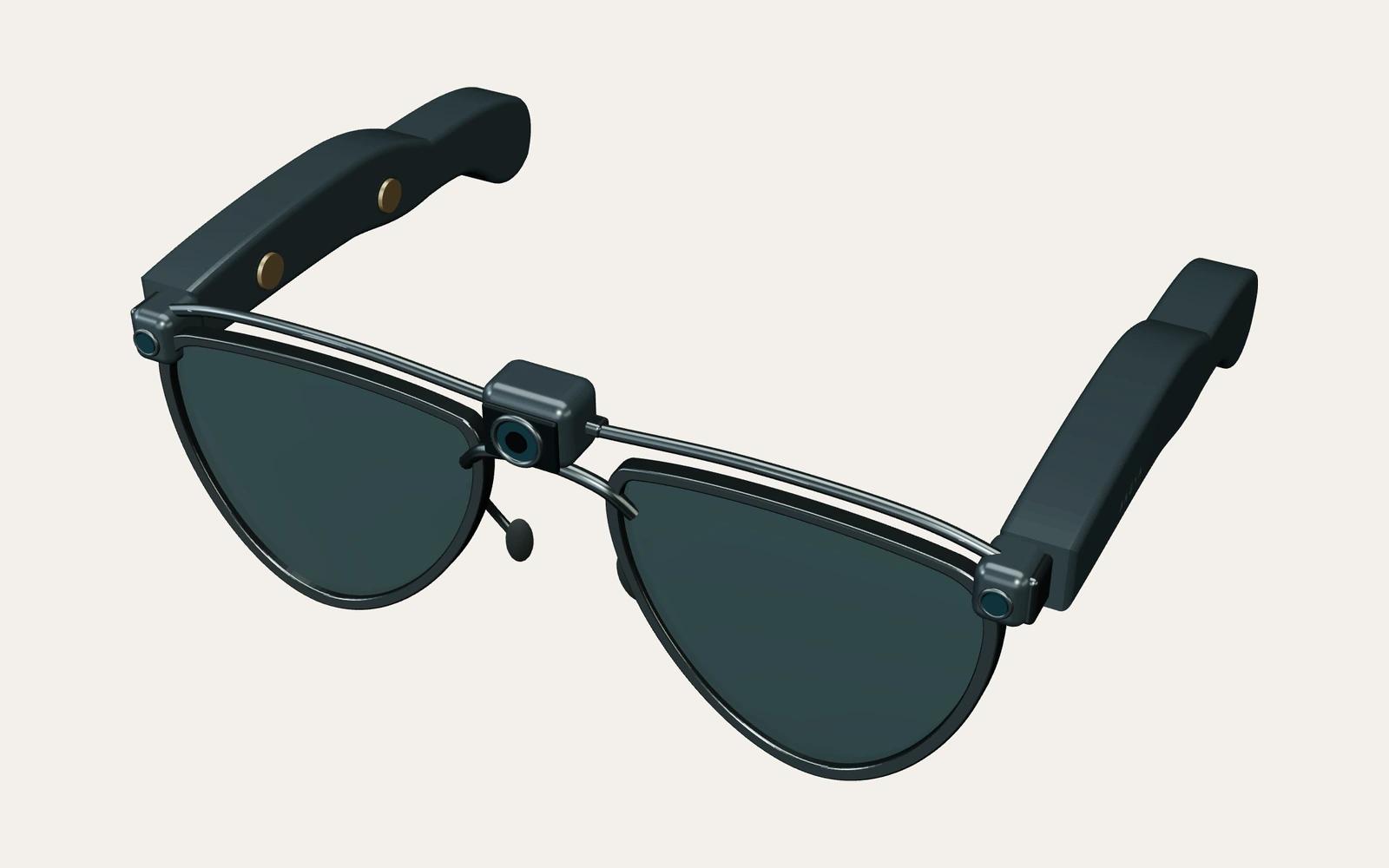
Aagya / Aviator frame
- Classic aviator shape
- Dark, teardrop-shaped lenses in a slim frame.
- One clean frame
- Curved arms and a compact bridge keep the shape simple.
- Small details
- Rounded edges, small contact points, and a dark grey finish.
Inspired by research
Where the sensors could sit
The coloured dots show where small sensors, called electrodes, could sit. They follow the 15 contact points in the GAPses research glasses.
Aagya’s design is still in development. These positions are illustrative, not a confirmed or tested Aagya sensor layout.
- Around the nose · 3
- For eye movements (EOG): one on each nose pad and one at the top of the nose, between the eyes (EOG_L, EOG_R, EOG_C).
- Along the sides · 8
- For brain signals (EEG): three along each side and one behind each ear (TL4–TL1 and TR4–TR1).
- Near the left ear · 2
- Two linked contacts that support the readings, called reference contacts (REF / TP9).
- Near the right ear · 2
- Two linked contacts that support the readings, called bias contacts (BIAS / TP10).
The study’s combined setup uses all 3 eye-movement sensors and 4 brain-signal sensors: one midway along each side and one behind each ear.
Read the GAPses research · Figure 1 and Sections III-A, III-F